
Company Formation

Company Formation in Italy: Types, Process & Costs

Register a company in Italy: compare SRL, SRLS, SpA and branch options, understand the notarial deed process, and see cost and timeline at a glance.

Book a ConsultationUpdated 2026-06-02
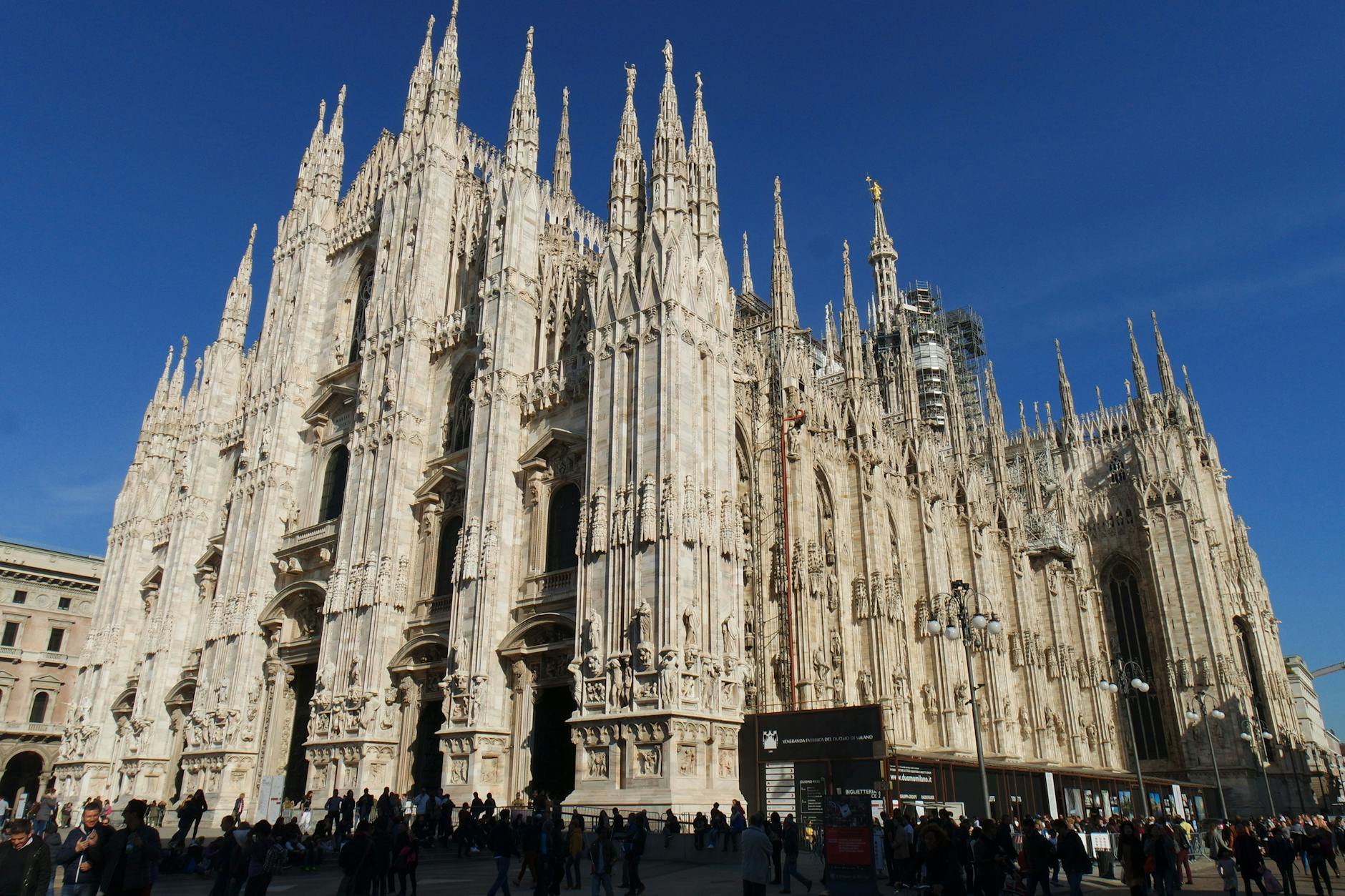
Company formation in Italy: office district and notarial documents.

Company formation in Italy follows a well-defined legal path: choose a legal entity, obtain a Codice Fiscale for each founder, sign a notarial public deed (atto costitutivo), and register with the Registro delle Imprese. The Italian SRL (Società a Responsabilità Limitata) is the most widely used entity for foreign founders, offering limited liability, flexible governance, and capital requirements as low as €1 under the low-capital variant.

Foreign founders and non-residents can incorporate an Italian company. Non-EU nationals are subject to the condizione di reciprocità (Art. 16 Preleggi), which allows incorporation when Italy and the founder's home country grant reciprocal rights. In practice, US citizens and most non-EU nationals qualify. EU citizens are exempt from this requirement entirely.

From our practice, the complete process from signing the notarial deed to receiving your active registration typically takes 5–15 working days. The sections below walk you through every step, cost, and tax consideration you need to evaluate before engaging a formation service.

Explore the full formation guide:


Get a free consultation on forming your Italian company. Our advisers can help you choose the right entity, estimate your costs, and coordinate the notarial process. Request a free consultation


Italian Company Types at a Glance

Italy offers several legal forms for conducting business. For most foreign founders, the SRL is the recommended starting point, but understanding the full range of options helps you make an informed decision.

EntityMin. capitalLiabilityNotary deedMembersBest for
SRL (standard)€10,000LimitedRequired (fee applies)Min 1 (natural or legal person)Most foreign founders; flexible governance
SRL (low-capital)€1–€9,999LimitedRequired (fee applies)Min 1 (natural or legal person)Early-stage; 20% profit reserve required
SRLS€1–€9,999LimitedRequired (no notary fee)Min 1 (natural persons only)Natural person founders; standard bylaws only
SpA€50,000LimitedRequired (fee applies)Min 1Larger ventures; external investment
Branch (succursale)NoneParent fully liableRequired (registration)Foreign companyTesting the market; no local legal entity
Representative officeNoneParent fully liableNot requiredForeign companyNon-commercial activities only

Sources: Art. 2463 §2 n.4 CC (SRL standard capital), Art. 2463 §4–5 CC (low-capital variant), Art. 2463-bis CC (SRLS), Art. 2327 CC (SpA capital), Registro delle Imprese requirements (branch).

For most foreign founders, the SRL is the optimal choice. It accepts both corporate and individual shareholders, permits custom bylaws, and does not impose the natural-person-only restriction that limits the SRLS. For a deeper comparison of all Italian company types, see our dedicated guide.


SRL vs SRLS vs SpA
SRL (standard)
SRLS
SpA
Minimum capital
€10,000
€1–€9,999
€50,000
Liability
Limited
Limited
Limited
Notary deed
Required (fee applies)
Required (no notary fee)
Required (fee applies)
Members
Min 1 (natural or legal)
Min 1 (natural persons only)
Min 1

How to Form a Company in Italy: Step-by-Step Overview

Registering a company in Italy follows a structured nine-step sequence coordinated between the notary, the Registro delle Imprese, and the Agenzia delle Entrate. Here is a pillar-level overview of the full process.

  1. Choose entity type and structure. Decide on the legal form (SRL, SRLS, SpA, or branch), the number of shareholders, the share capital amount, and the governance model (sole director vs. board).

  2. Obtain a Codice Fiscale for all founders and directors. A Codice Fiscale is a 16-character Italian tax identification code. Every founder and director must hold one before the notarial deed can be executed. Foreign nationals can apply at an Italian consulate in their home country or in person at any Agenzia delle Entrate office in Italy. There is no application fee.

  3. Prepare the atto costitutivo and statuto. The incorporation deed (atto costitutivo) and the bylaws (statuto) are drafted with the notary. For an SRL, the statuto governs shareholder rights, profit distribution, and governance. SRLS founders must use the standard inderogable bylaws prescribed by law.

  4. Deposit the share capital. Capital must be deposited into a dedicated bank account (or held in escrow by the notary) before the deed is executed. For a standard SRL with multiple members, at least 25% of cash contributions must be paid in at signing. A single-member SRL must pay in 100% of capital at formation (Art. 2464 CC).

  5. Execute the notarial public deed before an Italian notary. The atto costitutivo is signed before a licensed Italian notary (notaio) as a notarial public deed (atto pubblico), as required by Art. 2463 CC. This step legally constitutes the company.

  6. Notary deposits deed with the Registro delle Imprese. The notary must deposit the executed deed with the local Registro delle Imprese (Registro Imprese) within 20 days of signing (Art. 2330 §1 CC).

  7. Registry inscribes the company. After the notary's deposit, the Registro delle Imprese reviews and inscribes the company. This step typically completes within approximately 10 days of the deposit. The company acquires legal personality upon inscription.

  8. Obtain a Partita IVA via Comunicazione Unica. The Partita IVA (11-digit Italian VAT number) is applied for through the Comunicazione Unica single-window filing, which simultaneously notifies the Registro delle Imprese, the Agenzia delle Entrate, INPS, and INAIL. The Partita IVA is typically issued the same or next business day.

  9. Post-incorporation setup. Once registered, the company must: open a corporate bank account, activate a PEC (certified email) address for company directors, register with INPS and INAIL, file a SCIA (certified notice of start of activity) if the business activity requires one, and set up accounting books and e-invoicing through the SdI system.

For the complete step-by-step guide including timeline tables and notary-appointment checklists, see our full step-by-step guide to opening a company in Italy.

Can Foreign Founders Incorporate Remotely?

Yes. A foreign founder does not need to travel to Italy to incorporate. The most common route is granting a procura speciale (special power of attorney, apostilled) to a local representative, who then appears before the Italian notary on the founder's behalf. Virtual notarial meetings are also permitted under recent Italian law in certain circumstances.

Non-EU nationals must satisfy the condizione di reciprocità (Art. 16 Preleggi) before the notary can proceed. For a full walkthrough of the remote-incorporation and non-resident process, see our guide on forming an Italian company as a non-resident.


How to form a company in Italy
  1. 01

    Choose entity & structure

    Decide the legal form (SRL, SRLS, SpA, or branch), number of shareholders, capital, and governance model.

  2. 02

    Codice fiscale

    Every founder and director obtains a 16-character Italian tax code before the deed (no application fee).

  3. 03

    Notarial public deed

    The atto costitutivo is signed before a licensed Italian notary as an atto pubblico (Art. 2463 cc).

  4. 04

    Registro delle Imprese

    The notary deposits the deed within 20 days; the registry inscribes the company within about 10 days.

  5. 05

    Partita IVA

    Applied for via the Comunicazione Unica single-window filing, typically issued the same or next business day.

Documents and Requirements for Company Formation in Italy

Every formation begins with gathering the correct documents. Missing even one item can delay the notarial appointment.

Core documents required for most formations:

  • Valid passport or national ID for each founder and director.
  • Codice Fiscale for each founder and director. Obtainable at an Italian consulate abroad or at an Agenzia delle Entrate office in Italy; no fee.
  • Proof of a registered company address in Italy. This is the company's legal domicile for official correspondence. A registered office service address is acceptable.
  • Draft statuto (bylaws). For an SRLS, only the standard inderogable bylaws are permitted. For an SRL, custom bylaws are drafted with your notary.
  • Evidence of share capital deposit. Bank confirmation or notarial escrow receipt confirming the required capital has been deposited before signing.
  • Non-EU nationals: apostilled copies of founding documents and documentation supporting reciprocity eligibility (Art. 16 Preleggi).

For the full list of requirements and documents for each entity type, including apostille requirements and consulate procedures, see our dedicated requirements guide.


Company Formation Costs and Timeline in Italy

Cost and timeline are two of the most common questions foreign founders ask before committing to Italian incorporation. The figures below are indicative. Actual amounts depend on the entity type, share capital, and the specific notary and commercial registry you work with.

Cost itemIndicative amountNotes
Notary fee (SRL incorporation)~€2,300Varies with capital amount; SRLS: no notary professional fee
Registro Imprese registration fee~€520Government administrative fee
Chamber of Commerce annual fee~€200–€500Varies by region and company type
Codice Fiscale / Partita IVANo feeVia Italian consulate or in Italy
Stamp duties and bolloVariableSet by Agenzia delle Entrate

On timeline: The notary deposits the signed deed with the Registro delle Imprese within 20 days (Art. 2330 §1 CC). The registry inscribes the company within approximately 10 days of that deposit. The Partita IVA follows the same or next business day via Comunicazione Unica. From deed signing to fully active company, the process typically takes 5–15 working days.

For a detailed cost and timeline breakdown including professional service fees and regional differences, see our dedicated cost guide.


Indicative formation costs

~€2,300

Notary fee (SRL incorporation)

~€520

Registro Imprese registration fee

~€200–€500

Chamber of Commerce annual fee

5–15 days

From deed signing to active company

Taxes for Italian Companies: An Overview

An Italian SRL is subject to two primary corporate taxes plus VAT. Understanding the headline rates before formation helps you model post-tax returns and evaluate Italy's tax treaty network.

TaxRateNotes
IRES (corporate income tax)24% standardNational; applies to net profits
IRAP (regional production tax)3.9% standardRegional variation up to approximately 4.97%
IVA (VAT)22% standard; 10% / 5% / 4% reducedPartita IVA = 11 digits; IT prefix for VIES
Dividend WHT (individuals, non-treaty)26%Treaty may reduce; US–Italy treaty: 5%/15%

Italy has approximately 100 double-tax treaties in force, which can reduce withholding tax on dividends, interest, and royalties paid to foreign shareholders. e-invoicing through the SdI (Sistema di Interscambio) has been mandatory for essentially all businesses since 1 January 2024.

For the complete rates, calculation base, and treaty analysis, see our guide to corporate tax rates in Italy.


Ongoing Compliance After Formation

Forming the company is only the beginning. Italian law imposes a set of ongoing annual obligations that every SRL must meet to remain in good standing with the Registro delle Imprese and the Agenzia delle Entrate.

Key compliance requirements after formation:

  • Financial statements (bilancio). Must be approved within 120 days of year-end (180 days in permitted cases) and filed with the Registro delle Imprese within 30 days of approval.
  • e-invoicing via SdI. Mandatory for essentially all businesses since 1 January 2024. Every sales invoice must be transmitted through Italy's Sistema di Interscambio.
  • PEC (certified email) for company directors. Mandatory for all SRL directors.
  • IRES and IRAP tax filings. Annual corporate income tax and regional production tax declarations.
  • INPS and INAIL contributions. Social security (INPS) and workplace injury insurance (INAIL) contributions, due depending on whether the company has employees or managing directors who contribute.
  • Statutory auditor (sindaco). Mandatory under Art. 2477 CC when the SRL exceeds, for two consecutive years, at least one of three thresholds: €4M total assets, €4M revenues, or 20 employees (D.Lgs. 14/2019 as amended by D.L. 32/2019).
  • SCIA (certified notice of start of activity). Required before commencing certain regulated business activities. Filing obligations depend on the specific ATECO activity code.

For help with accounting requirements for Italian companies, or if you need a compliant address for your registration documents, see our Italian registered office service.


Why the Italian SRL Is the Recommended Entity for Foreign Founders

The Italian SRL (Società a Responsabilità Limitata) is Italy's closest equivalent to a US LLC or UK private limited company. It provides a liability shield between the company and its shareholders: members are generally liable only up to the amount of their subscribed capital (Art. 2462 CC). One important exception applies when the SRL has a single member: the sole shareholder loses limited liability for company debts if share capital is not fully paid in, or if the single-member status is not publicly registered (Art. 2462 §2 CC).

Capital thresholds are accessible for most founders. The standard minimum is €10,000 (Art. 2463 §2 n.4 CC). A reduced-capital SRL can be formed with as little as €1, but all capital must be paid in cash at formation and 20% of annual net profits must be set aside as a legal reserve each year until the combined capital and reserve reaches €10,000 (Art. 2463 §4–5 CC). This 20% reserve requirement is widely misreported in English-language content as 5%; the correct figure is one-fifth of annual net profits per annum.

The SRL also offers governance flexibility that the SRLS does not. An SRL accepts corporate shareholders alongside individual members, allows fully custom bylaws, and can scale to larger capital structures without changing legal form. For multi-national founding teams or structures that include a holding company as a shareholder, the SRL is the only appropriate choice: SRLS membership is restricted to natural persons (Art. 2463-bis CC).

For a comprehensive breakdown of the entity, including governance rules, director liability (Art. 2476 CC), shareholder agreements, and the single-member regime, see our full guide to the Italian SRL (Società a Responsabilità Limitata).


Ready to register your Italian SRL? Contact us for a tailored formation quote. We coordinate entity selection, notary scheduling, and post-formation compliance setup.

Our services include:

  • Entity type guidance (SRL, SRLS, SpA, branch)
  • Notary coordination and deed preparation
  • Post-formation compliance setup (PEC, SdI, INPS/INAIL)

Request a formation quote


Company Formation by City

We provide company formation services across Italy's main business centers. Each city has its own commercial registry, local Chamber of Commerce fees, and business ecosystem. Click below to explore what formation looks like in your preferred location.

  • Milan: Italy's financial and commercial capital, home to the majority of foreign-owned SRLs and the most active Registro delle Imprese. Company formation in Milan, Via Dante 14, 20121 Milano MI. Phone: +39 02 9475 8210.

  • Rome: Italy's national capital and center of government contracting, public administration, and professional services. Company formation in Rome, Via Barberini 50, 00187 Roma RM. Phone: +39 06 9480 3360.

  • Florence: The hub for Tuscany's fashion, design, tourism, and agri-food sectors. Register a company in Florence, Via Cavour 22, 50129 Firenze FI. Phone: +39 055 200 1450.

FAQ

Frequently asked questions

The SRL (Società a Responsabilità Limitata) is the most widely used entity. It offers limited liability, flexible governance, a minimum capital as low as €1 (with a 20% profit-reserve requirement until reaching €10,000), and it does not require natural-person members, making it accessible to foreign companies and individuals alike.

Yes. Non-EU nationals are subject to the condizione di reciprocità (Art. 16 Preleggi), which allows incorporation if Italy and the founder's home country grant reciprocal rights. In practice, US citizens and most non-EU nationals qualify. EU citizens are exempt from this requirement.

Not necessarily. A foreign founder can grant a procura speciale (special power of attorney, apostilled) to a representative who appears before the Italian notary on their behalf. Virtual notarial meetings are also permitted under recent Italian law in some circumstances.

The standard minimum capital is €10,000 (Art. 2463 §2 n.4 CC). A reduced-capital SRL can be formed with as little as €1, but capital must be fully paid in cash at formation and 20% of annual net profits must be reserved each year until the combined capital and reserve reaches €10,000 (Art. 2463 §4–5).

Both are limited liability companies. An SRLS (semplificata, Art. 2463-bis) requires capital of €1–€9,999, allows only natural persons as members, uses standard inderogable bylaws, and does not charge a notary professional fee. An SRL allows corporate shareholders, custom bylaws, and capital above €9,999. For flexibility, most foreign founders choose the standard SRL.

From notarial deed signing to active Registro Imprese inscription, the process typically takes 5–15 working days. The notary deposits the deed within 20 days (Art. 2330); the registry inscribes within approximately 10 days of deposit. Partita IVA can be issued the same or next business day via Comunicazione Unica.

Core documents include: valid passport or ID; Codice Fiscale for each founder and director (obtainable at an Italian consulate abroad); proof of registered address for the company; draft statuto (bylaws); and evidence of share capital deposit. Non-EU nationals may also need apostilled documents and proof of reciprocity eligibility.

An SRL pays IRES (corporate income tax) at 24% on net profits, plus IRAP (regional production tax) at approximately 3.9%. Standard VAT (IVA) is 22%. Dividend distributions to individual non-resident shareholders are subject to 26% withholding tax, reduced under applicable tax treaties.

Italian law does not require a director to be an Italian resident or national. A foreign non-resident can serve as sole director (amministratore unico). However, practical requirements such as signing documents in Italy, opening a corporate bank account, and maintaining a PEC-certified email may make a local presence or registered office service valuable.

Annual requirements include: filing financial statements (bilancio) with Registro delle Imprese within 30 days of approval (approved within 120 days of year-end); e-invoicing via SdI for all transactions; maintaining a PEC address for company directors; IRAP and IRES tax filings; and INPS/INAIL contributions. A statutory auditor becomes mandatory once the SRL exceeds two of three thresholds for two consecutive years: €4M assets, €4M revenues, or 20 employees (Art. 2477 CC).

A Codice Fiscale is a 16-character Italian tax identification code assigned to individuals. All founders and directors must hold one before the notary can execute the incorporation deed. Foreign nationals can apply at an Italian consulate in their home country or in person at any Agenzia delle Entrate office in Italy.

A branch (succursale) is a registered extension of the foreign parent company, not a separate legal entity. The parent company remains fully liable for branch debts. An SRL is a separate legal entity with its own liability shield. Most foreign companies entering Italy for active business operations choose an SRL over a branch to limit the parent's exposure.

Need help with this in practice?

Our specialists in Milan, Rome, and Florence can handle it end to end.

Ready to form your SRL in Italy?

Tell us about your plans and we will map the fastest compliant path, with a clear fixed quote.

Get Your Quote